
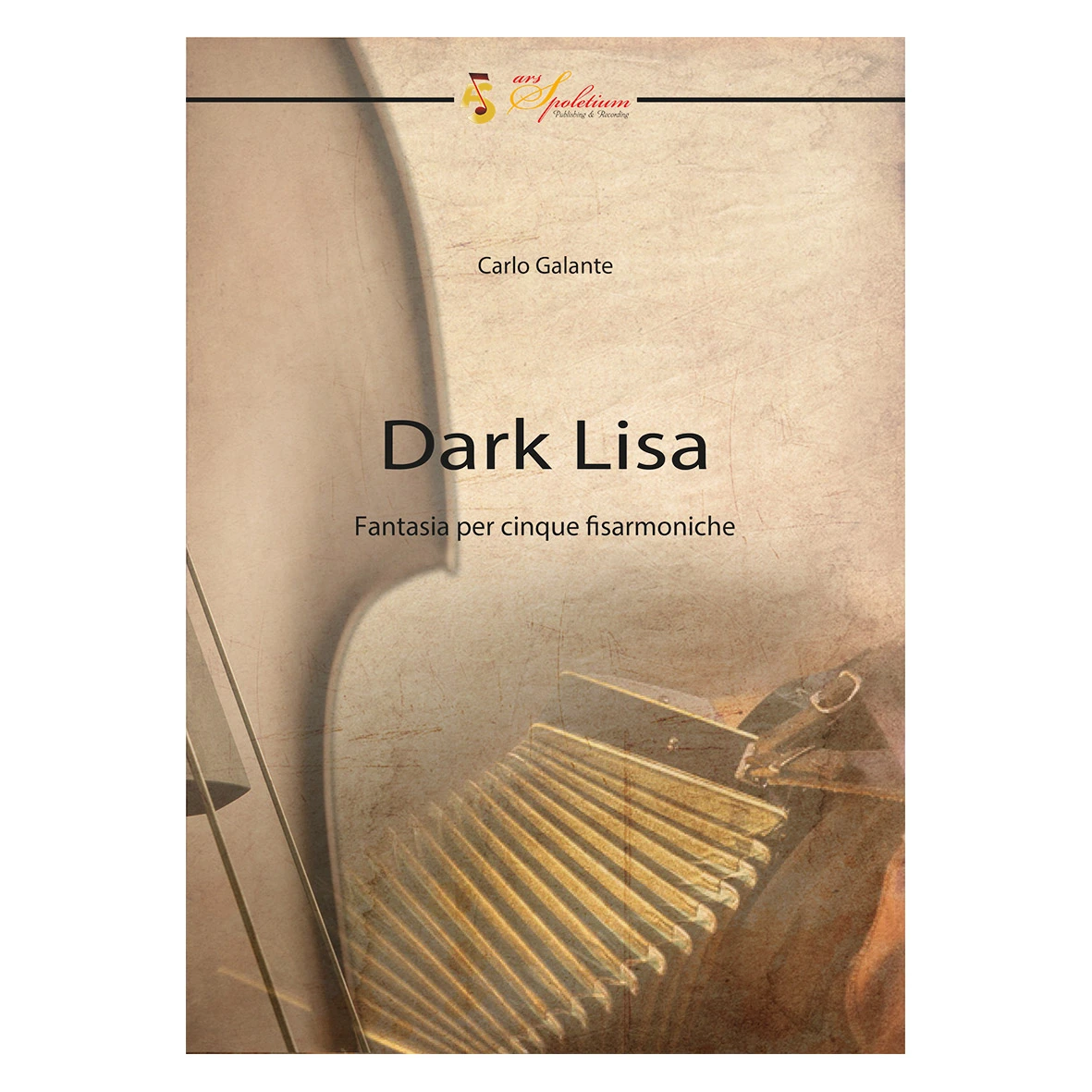
Dark Lisa (Fantasia per cinque fisarmoniche)
15,00 €
La proposta di scrivere un brano per cinque fisarmoniche su tema beethoveniano mi ha entusiasmato e impensierito al contempo.
L’entusiasmo proveniva dalla felicità di scrivere per un organico mai provato prima che moltiplica per cinque l’uso di uno strumento prediletto.
(LA PARTITURA IN OGGETTO È DISPONIBILE SOLO NELLA VERSIONE PDF)
The proposal to write a piece for five accordions on a Beethovenian theme excited and worried me at the same time.
The enthusiasm came from the happiness of writing for an ensemble that had never been tried before, multiplying the use of a favorite instrument by five.
(ONLY PDF VERSION)
La proposta di scrivere un brano per cinque fisarmoniche su tema beethoveniano mi ha entusiasmato e impensierito al contempo.
L’entusiasmo proveniva dalla felicità di scrivere per un organico mai provato prima che moltiplica per cinque l’uso di uno strumento prediletto. L’inquietudine nasceva, al contrario, dalla preoccupazione di scivolare in una vuota retorica celebrativa, il peggiore omaggio a uno dei più grandi creatori musicali che il genere umano abbia partorito. La titubanza è venuta definitivamente meno, lasciando campo libero all’entusiasmo, nel momento in cui, come spesso succede nella mia musica, mi è venuto in mente un breve spunto narrativo da cui far principiare la mia immaginazione.
Ho immaginato la celeberrima Elisa beethoveniana, alla quale il grande compositore dedicò il breve brano pianistico Per Elisa (il suo pezzo più “pop”), diventare una contemporanea Lisa; non più giovane e radiosa gentildonna romantica, ma una ragazza dal perturbante e inquietante fascino dark. Così è nato il quintetto per cinque fisarmoniche Dark Lisa, tutto costruito musicalmente sul notissimo inciso, il quale, nelle sue molteplici trasformazioni e trasfigurazione, diventa il lessico di una trama sonora sospesa e inquieta come in un racconto di fantasmi.
Il percorso formale del brano è costituito da un succedersi di frasi musicali, quasi dei pannelli sonori, sempre più distese, in cui l’inciso beethoveniano è costantemente variato e permutato ma sempre in qualche modo riconoscibile. Il clima sonoro sottile e inquieto dell’inizio mano a mano si intensifica e procede verso un fortissimo dei cinque strumenti dal carattere assai ritmico e incalzante; da questo momento di massima intensità il brano, come riavvolgendosi su stesso ritorna verso l’intensità dell’inizio, ma diventando ancora più esile finendo nel puro soffio del mantice delle fisarmoniche.
—————————————————————–
The proposal to write a piece for five accordions on a Beethovenian theme excited and worried me at the same time.
The enthusiasm came from the happiness of writing for an ensemble that had never been tried before, multiplying the use of a favorite instrument by five. On the other hand, the anxiety arose from the worry of slipping into an empty celebratory rhetoric, the worst homage to one of the greatest musical creators that mankind has given birth to. The hesitancy came definitely less, leaving the field open to enthusiasm, when, as often happens in my music, I came up with a short narrative cue from which to start my imagination.
I imagined the famous Beethovenian Elisa, to whom the great composer dedicated the short piano piece Per Elisa (his most “pop” piece), becoming a contemporary Lisa; no longer a young and radiant romantic gentlewoman, but a girl with a disturbing and disquieting dark charm. Thus was born the quintet for five accordions Dark Lisa, all built musically on the famous aside, which, in its many transformations and transfigurations, becomes the lexicon of a sound plot suspended and restless as in a ghost story.
The formal course of the piece is made up of a succession of musical phrases, almost like sound panels, increasingly extended, in which Beethoven’s aside is constantly varied and permuted but always somehow recognizable. The subtle and restless sound climate of the beginning gradually intensifies and proceeds towards a fortissimo of the five instruments with a very rhythmic and pressing character; from this moment of maximum intensity the piece, as if rewinding on itself, returns towards the intensity of the beginning, but becoming even more slender ending in the pure breath of the accordion bellows.


